

Direct Payments: Complete Guide

Learn how Direct Payments work, who qualifies, how to manage them, and how to employ a personal assistant to arrange your own care.

  • 200,000+

    People use Direct Payments in England

  • 25%

    Growth in Direct Payments over 5 years

  • Care Act 2014

    Legal framework for Direct Payments

  • Full Control

    Choose your own care provider

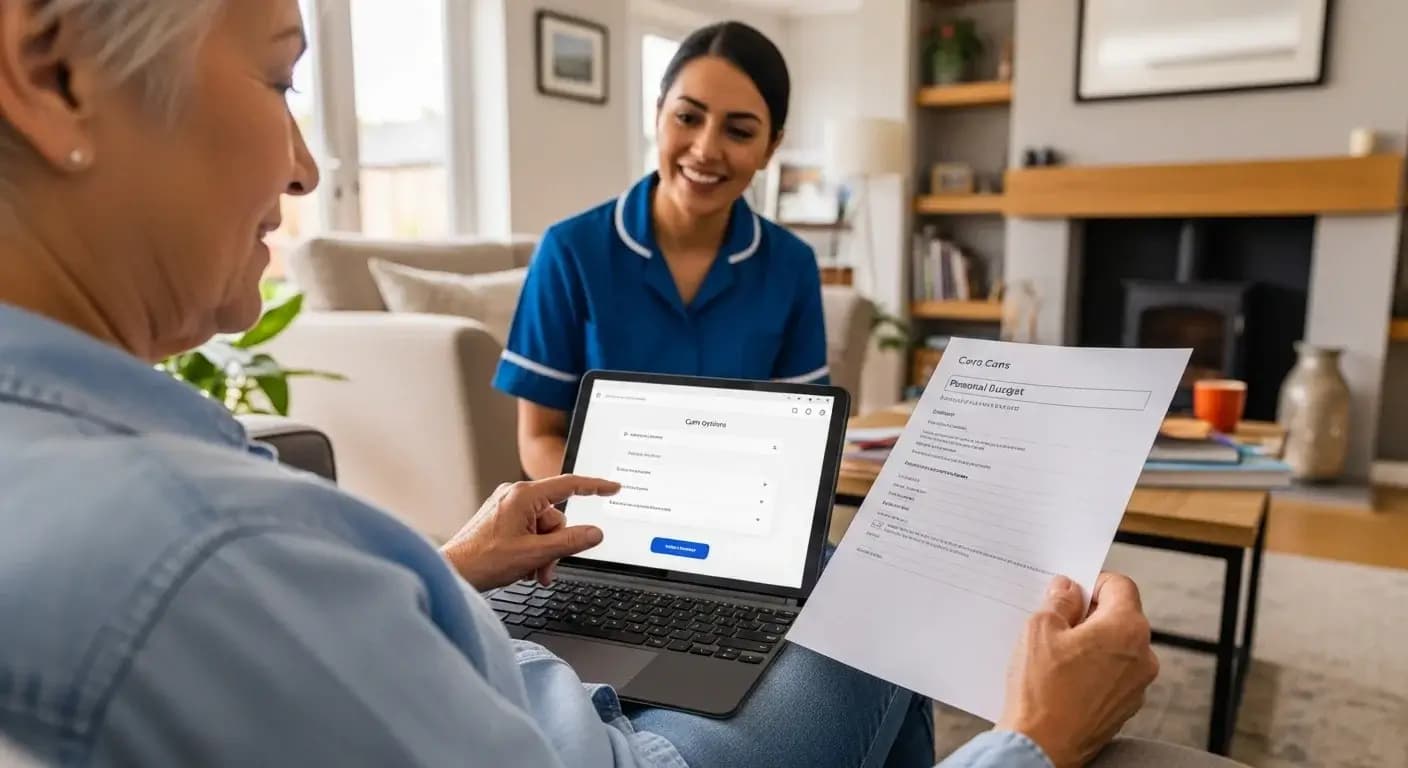
A carer helping an older man with a letter and a laptop

What Are Direct Payments?

Direct Payments are cash payments made directly to you by your local authority instead of the council arranging and paying for your care. Rather than the council deciding which care provider you use, you receive the money and choose how to spend it on arranging your own support.

Direct Payments are part of the personal budget provisions in the Care Act 2014. They give you choice and control over how your care needs are met, allowing you to tailor your support to your own preferences and circumstances.

Anyone with eligible care needs can request Direct Payments: adults assessed as needing care and support, carers assessed as needing support, and parents of disabled children. Over 200,000 people in England use Direct Payments to arrange the care that works best for them.

Who Can Get Direct Payments?

Direct Payments are available to anyone with eligible care needs under the Care Act 2014. This includes:

  • Who Can Apply?

    Adults assessed as needing care and support, carers assessed as needing support, parents of disabled children, people who lack capacity (managed by a suitable person on their behalf)

  • Key Requirements

    Have eligible care needs (determined by assessment from your local authority), be willing and able to manage the payments, or have someone to manage them for you, not be subject to certain mental health or criminal justice orders (restrictions apply in some circumstances)

How Direct Payments Work

The process of getting Direct Payments follows a clear series of steps

  1. Care Needs Assessment

    Contact your local authority and request a free care needs assessment. This is your legal right under the Care Act 2014. An assessor will evaluate your daily activities, health, safety, and social wellbeing to determine your needs.

  1. Receive Indicative Personal Budget

    If you have eligible needs, the council calculates a personal budget. This is the total amount the council would typically spend on arranging your care. This figure helps you understand what resources are available.

  2. Choose Direct Payments

    You decide whether to accept Direct Payments or have the council arrange care for you. You do not have to choose Direct Payments; it is entirely optional.

  3. Create a Support Plan

    Once you choose Direct Payments, you create a support plan showing how you will use the money to meet your assessed care needs. The council must agree that your plan will meet your needs safely and appropriately.

  4. Payments Deposited

    The council deposits your Direct Payment into a separate bank account (normally a pre-paid card or designated account) either weekly, fortnightly, or monthly, depending on what you prefer.

  5. Arrange and Pay for Care

    You arrange your own care using your Direct Payments. You can employ a personal assistant directly, use a registered home care agency like Living Plus Care Services, or a combination of both.

  6. Keep Records and Submit Returns

    You must keep receipts and records of how you have spent your Direct Payments. Annually, you submit a monitoring return to the council showing what you spent the money on. This ensures transparency and accountability.

What You Can Spend Direct Payments On

Direct Payments must be used to meet your assessed care needs. Here are examples of what you can and cannot spend them on

What You CAN Spend Direct Payments On

  • Employing a personal assistant directly
  • Paying a CQC-registered home care agency (like Living Plus Care Services)
  • Equipment and minor home adaptations that support your independence
  • Respite care to give family carers a break
  • Activities that meet your assessed needs (social activities, hobbies, education, employment support)
  • Transport to activities related to your care needs
  • Training courses to help you manage your Direct Payments or develop new skills

What You CANNOT Spend Direct Payments On

  • Permanent residential care (usually; only in exceptional circumstances with council approval)
  • Anything unrelated to your assessed care needs
  • Paying a close family member who lives with you (except in exceptional circumstances approved by the council)
  • Private hospital treatment or surgical fees
  • Holidays or leisure activities not related to meeting assessed needs

If you are unsure whether something is allowable, always check with your local authority before spending the money.

How Much Will I Get?

Your Direct Payment amount is based on your personal budget, calculated from your care needs assessment and financial assessment.

How Your Direct Payment Is Calculated

The council calculates the cost of meeting your assessed needs, deducts your financial contribution, and pays the remainder as your Direct Payment.

  • Personal Budget

    £X/wk

    Cost of meeting your needs

  • Your Contribution

    £Y/wk

    Based on financial assessment

  • Direct Payment

    £X−Y/wk

    Deposited to your account

  • Below £14,250

    Savings are disregarded. The local authority contributes the full cost of your care.

  • £14,250 – £23,250

    You contribute £1 per week for every £250 of savings above the lower threshold.

  • Above £23,250

    You are generally expected to pay the full cost. However, your home is NOT included in the assessment for home care.

Employing a Personal Assistant

Using Direct Payments to employ a personal assistant gives you complete control — but also means legal responsibilities as an employer.

ResponsibilityWhat It InvolvesStatus
HMRC RegistrationRegister as an employer with HMRC and deduct income tax and National Insurance from wages.Legal Requirement
Employment ContractProvide a written contract outlining pay, hours, holidays, sickness entitlement, and terms of employment.Legal Requirement
DBS CheckArrange a Disclosure and Barring Service check for the personal assistant before they start work.Legal Requirement
Employer's Liability InsuranceMust be in place before the assistant starts work. Typically costs £100–£200 per year via specialist brokersLegal Requirement
Paid Holiday5.6 weeks of paid annual leave per year as a minimum entitlement under employment lawLegal Requirement
Pension Auto-EnrolmentIf the assistant earns over the auto-enrolment threshold, you must contribute to a workplace pension scheme.If Applicable
Payroll ManagementManage monthly payroll, payslips, and PAYE submissions. Specialist payroll services cost approx. £5–£10/month per employee.Support Available
  • Payroll Services

    Specialist companies manage tax, National Insurance, and payslips for a fee — typically £5–£10 per month per employee. Many councils provide this free.

  • Skills for Care

    Free resources, guidance, and training specifically designed to help people employing personal assistants through Direct Payments.

  • Council Support Services

    Many councils provide free support workers to help you recruit, manage, and pay your personal assistant throughout the process.

Using Direct Payments with a Care Agency

You do not have to employ someone directly. Many people use their Direct Payments to pay a registered care agency instead — all the choice, none of the employer burden.

How It Works

  • You choose which agency you want to use
  • The agency handles all employment responsibilities (payroll, tax, National Insurance, DBS checks)
  • You pay the agency directly from your Direct Payments
  • The agency provides trained, supervised, and CQC-regulated care
  • You have cover for sickness, holidays, and staff turnover

This approach gives you flexibility whilst removing the administrative burden of being an employer.

Living Plus Care Services and Direct Payments

Living Plus Care Services accepts Direct Payment clients in Hatfield, Hertfordshire and Peterborough, Cambridgeshire. Because we are a CQC-registered agency, all our carers are trained, supervised, checked by the DBS, and covered by insurance and safeguarding policies.

When you use your Direct Payments with us, you benefit from no employer responsibilities, professionally trained staff, cover for sickness and holidays, CQC regulation and oversight, and transparent pricing.

Managing Your Direct Payments

Once your Direct Payments start, you need systems in place to manage the money, keep records, and report to the council.

A woman managing paperwork at a laptop
  • Separate Bank Account

    Your Direct Payments are deposited into a separate bank account or pre-paid card. This makes it easy to track spending and keep the money separate from your personal finances. Most councils help you set this up free of charge.

  • Keeping Records

    Keep invoices from care providers, receipts for equipment, payslips (if employing a PA), bank statements, and evidence of insurance. Accurate records ensure you're getting value for money and meeting your legal obligations.

  • Annual Monitoring Return

    Each year, your local authority will ask you to submit a monitoring return showing how you've spent your Direct Payments. This is straightforward — you list what you spent and provide evidence. Support is available if needed.

  • Underspend and Overspend

    If you have underspent (not used all your money), the unspent amount typically rolls over to the next year. If you have significantly overspent, you and the council will need to discuss how to address this together. You can also request a review at any time if your needs change.

  • Getting Help

    You do not have to manage alone. Councils provide free Direct Payment support workers, payroll services, recruitment support, peer groups, and advocacy organisations to help you every step of the way.

    Call us today

Direct Payments and Other Benefits

Direct Payments do not count as income for benefit purposes. They are designed to work alongside your existing benefits — not replace them.

BenefitAffected by Direct Payments?Notes
Attendance AllowanceNot AffectedContinues unchanged. Up to £110.40/week (higher rate, 2025/26).
Personal Independence Payment (PIP)Not AffectedContinues unchanged and can also contribute towards care costs.
Housing BenefitNot AffectedDirect Payments are not counted as income for Housing Benefit purposes.
Council Tax Benefit / ReductionNot AffectedNot counted as income. Your council tax support continues as before.
Your Own Financial ContributionMay ApplyYou may still need to contribute from your own income/savings based on financial assessment. The council funds the remainder via Direct Payments.

If Things Go Wrong

Most people using Direct Payments have a positive experience, but it is important to know your options if issues arise.

If You Cannot Manage the Account

If you find managing the account overwhelming or your capacity changes (for example, due to illness or cognitive decline), you can:

Ask a family member, friend, or professional representative to take over management, ask the council for support from their Direct Payment support service, request the council to manage the account on your behalf (though you retain choice over your care)

Giving Up Direct Payments

If managing Direct Payments becomes too difficult or your circumstances change, you can give up Direct Payments at any time and ask the council to arrange care for you instead. This is your right.

Dispute Resolution

If you disagree with the council about your Direct Payments amount, your support plan, or how you are being treated, you have the right to:

Raise a formal complaint with the council (every council has a complaints procedure), request that the council review your personal budget or support plan, ask for advocacy support from an independent organisation.

Reviewing Your Support Plan

You can ask for your support plan to be reviewed at any time. If your needs change, your circumstances alter, or you want to try a different arrangement, request a review and work with the council to update your plan.

Local Information: Hertfordshire and Cambridgeshire

The processes for Direct Payments are broadly similar across England, but each local authority has its own team and processes. Here is local information for the areas we serve.

  • Hertfordshire County Council

    Hertfordshire County Council administers Direct Payments for adults with eligible care needs assessed in Hatfield and across Hertfordshire. They provide free support to help you manage your Direct Payments.
    www.hertfordshire.gov.uk.

  • Cambridgeshire County Council

    Cambridgeshire County Council administers Direct Payments for Peterborough and surrounding areas of Cambridgeshire. Visit www.cambridgeshire.gov.uk or contact them directly for information about Direct Payments in your area.

  • Peterborough City Council

    Peterborough City Council also administers care services and Direct Payments within the city. Contact their Adult Social Care team for information about Direct Payments in Peterborough
    www.peterborough.gov.uk.

Local Support Services

Both Hertfordshire and Cambridgeshire areas have local organisations offering support to people using Direct Payments, including payroll services, recruitment help, peer support groups, and advocacy. Ask your local authority for recommendations.

Frequently Asked Questions

Frequently Asked Questions About Direct Payments

Find answers to common questions about direct payments. If you can't find what you're looking for, please call us on 0333 577 0877.

Chat with our team.

Ready to Explore Direct Payments?

Contact your local authority to request a care needs assessment, or speak with Living Plus Care Services about using your Direct Payments with us.

Book Free Assessment: www.livingpluscare.co.uk/contact

Hatfield: 01707 707599Peterborough: 01733 911656