





How it works

Free Care Assessment: What to Expect When You Contact Us

Arranging care for someone you love can feel overwhelming. You may have questions you are not sure how to ask, concerns you are worried about voicing, and uncertainty about what the right support even looks like. That is why our free care assessment exists. It is a chance to sit down with someone who understands care, talk through your situation without any pressure, and get honest answers about what might help.

Over 10yrs+
Combined care management.
48hrs
Assessment set in many areas.
1-2hrs
In-depth home visit
A woman writing at a kitchen table with an older man and a woman

What Is a Free Care Assessment?

A care assessment is a conversation. One of our experienced care managers will visit you at home to learn about the person who needs care, understand their daily routine, discuss any health conditions or mobility challenges, and talk through what kind of support might be helpful.

This is different from a local authority care needs assessment, which is carried out by your council to determine whether you qualify for funded care. Our assessment is specifically about understanding whether our services are right for you and creating a picture of what personalised care could look like.

A Conversation, Not an Interview

During the assessment, we will look at practical matters like physical health, medication, mobility, and personal care needs. But we will also take time to understand the person as an individual. What do they enjoy? What matters to them? What are they finding difficult right now? What would make their life easier or more comfortable?

The assessment typically takes between one and two hours, depending on how complex the situation is and how much you want to discuss. There is no rush. We are there to listen and to help.

We will talk about

  • Daily routines and what a typical day looks like
  • Health conditions and mobility challenges
  • Personal care needs, discussed with sensitivity and dignity
  • Emotional wellbeing, companionship, and social connection
  • Any concerns you or your family have right now

Who Carries Out the Assessment?

Your assessment will be carried out by one of our care managers. These are experienced care professionals who have spent years working in the sector. They understand the challenges families face, they know how to have sensitive conversations about personal care needs, and they are skilled at identifying what kind of support would genuinely help.

  • Experienced. Qualified. Compassionate.

    Our care managers are trained in person-centred care planning, risk assessment, safeguarding, and medication support. Just as importantly, they are skilled listeners. They know how to ask the right questions in a calm and reassuring way, especially when discussing personal care needs, mobility challenges, or changes in health.

  • Here to Help, Not to Sell

    They are not salespeople. Their role is not to pressure you into making a decision. Their responsibility is to understand your situation properly, give you honest answers, and help you work out whether home care is the right option. If we believe another type of support would be more appropriate, we will say so. If the timing does not feel right, we will respect that.

  • Consistency Matters

    The care manager who carries out your assessment will also oversee the creation of your personalised care plan if you choose to proceed. This continuity means you will not have to repeat yourself to multiple people. From your very first conversation, you are building a relationship with someone who understands your story and will help shape the care you receive.

Built on Experience and Compassion

The person who conducts your assessment will also be involved in creating your care plan if you decide to go ahead.

  • Years of sector experience
  • Trained in safeguarding and risk assessment
  • Skilled in complex care planning
  • Sensitive, respectful conversations
  • Dignity at every stage
  • Person-centred approach
  • No contracts signed on the day
  • No pressure to proceed
  • Honest, transparent guidance
Medication boxes, a thermometer and a GP letter on a table

What Questions Will We Ask During the Assessment?

We know that some families feel nervous about the assessment, worried about what will be asked or how to answer. There is no need to prepare scripted responses or memorise information. We simply want to understand the situation as it really is.

  • Physical Health and Medical Conditions

    We will ask about any diagnosed conditions, recent hospital stays, ongoing treatments, and how health issues affect daily life. This helps us understand whether any specialist care knowledge is needed and how to keep the person safe and well.

  • Mobility and Movement

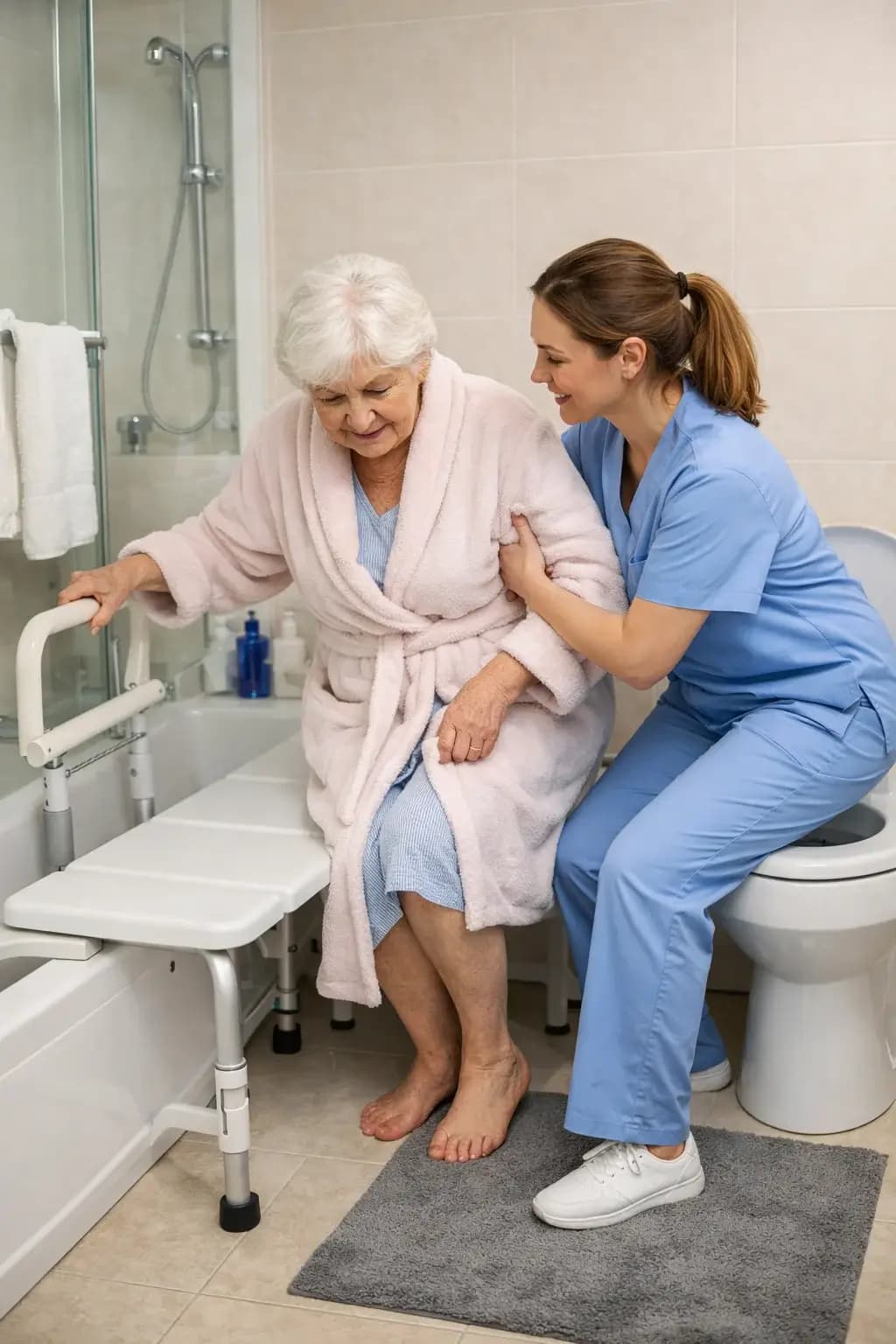
    Can the person move around the home safely? Do they use any walking aids, a wheelchair, or a stairlift? Have there been any falls recently? We need to understand mobility levels to ensure carers can provide appropriate support and that any equipment needs are identified.

  • Personal Care Needs

    This covers washing, bathing, dressing, toileting, and continence care. We understand these are sensitive topics. Our care managers are trained to discuss personal care with dignity and discretion. Being honest about these needs is essential for creating a care plan that truly helps.

  • Medication

    What medications are being taken? Who currently manages them? Are there any difficulties with remembering doses or handling tablets? Medication support is one of the most common reasons families seek home care, and we need to understand the situation clearly.

  • Cognitive Health and Memory

    If there are any concerns about memory, confusion, or a dementia diagnosis, we will discuss how this affects daily life. We will also talk about communication preferences and whether the person sometimes becomes anxious or distressed.

  • Nutrition and Mealtimes

    Is the person eating and drinking well? Do they need help preparing meals or encouragement to eat? Are there any swallowing difficulties or dietary requirements? Proper nutrition is fundamental to health and wellbeing, especially for older adults.

  • Daily Routine and Preferences

    We want to understand how the person likes to spend their day. When do they prefer to get up? What activities do they enjoy? Do they have regular appointments or social commitments? Care should fit around life, not the other way around.

  • Social and Emotional Wellbeing

    Is the person feeling isolated or lonely? Are they able to maintain relationships with friends and family? Do they have hobbies or interests they would like to continue? Companionship and emotional support are just as important as physical care.

  • Home Environment

    With your permission, we will have a look around the home to identify any safety concerns or practical considerations. This might include loose carpets, poor lighting, or difficulties accessing certain rooms. We can sometimes suggest small changes that make a big difference to safety.

How to Prepare for Your Care Assessment

You do not need to do anything special to prepare. However, having certain information to hand can make the conversation more productive. If possible, gather the following before the assessment:

  • A list of current medications, including dosages and when they are taken
  • Contact details for the GP and any other healthcare professionals involved
  • Any recent hospital discharge notes or clinic letters
  • Information about existing care arrangements
  • Details of any Power of Attorney arrangements
  • Notes about any specific concerns or questions you want to raise

Do not worry if you cannot find all of this.

We can work with whatever information is available and follow up on anything else later. It can be helpful to involve family members in the assessment if they play a role in care decisions.

What Happens After the Assessment?

After the assessment, our care manager will have a clear picture of your care needs. Here is the journey from first contact to care beginning:

  1. Step 1

    Book Your Assessment

    Call us or fill in our enquiry form. We will arrange a convenient time to visit. We will explain what care options we can offer and give you an idea of costs based on the level of support discussed. You will receive this information in writing so you can review it in your own time.


  2. Step 2

    Discussion & Guidance

    If you want to go ahead, we will create a detailed care plan that covers everything we discussed. This includes daily routines, health conditions, medication schedules, personal preferences, emergency contacts, and goals for the care. You will have the chance to review and approve this plan before any care begins.

  3. Step 3

    Carer Matching

    We will then begin matching you with carers whose skills, experience, and personality suit your needs. We take matching seriously because the relationship between a carer and the person they support is fundamental to good care.

  4. Step 4

    Introduction

    Once carers are matched, we will arrange introductions before care starts. This gives everyone a chance to meet and ensures the person receiving care feels comfortable with who will be supporting them.

  5. Step 5

    Care Plan (If Proceeding)

    If you decide not to go ahead, that is absolutely fine. There is no follow-up pressure or sales calls. The assessment remains a helpful conversation, and you are welcome to contact us in the future if circumstances change.

Council vs Private Care Assessment: What Is the Difference?

A council care needs assessment is conducted by your local authority under the Care Act 2014. Its purpose is to determine whether you have eligible needs that the council has a duty to meet. The council assessment focuses on eligibility criteria and funding.

Our free care assessment is conducted by Living Plus Care Services directly. It is not about eligibility for funded care. It is about understanding your needs in detail and working out how our services can help. Even if you plan to fund your care privately, our assessment ensures we create a care package that genuinely meets your needs.

A nurse with her hands on the shoulders of a smiling older woman

You can have both types of assessment.

If you think you might be eligible for council funding or benefits like Attendance Allowance, we can explain how to apply alongside arranging your care. Our assessment can often be arranged more quickly, and it focuses entirely on creating the best possible care.

Areas We Cover

We provide free care assessments across Hertfordshire and Cambridgeshire from our CQC-registered branches. Local carers serving local communities.

Hertfordshire

CQC Rated GoodBased in Hatfield
4.9

Our Hertfordshire branch provides free care assessments across the county, from our office at 32 Market Place, Hatfield AL10 0LN.

  • St Albans
  • Watford
  • Hemel Hempstead
  • Stevenage
  • Hitchin
  • Welwyn Garden City
  • Hatfield
  • Letchworth
  • Waltham Cross
  • Borehamwood
  • Harpenden
  • Potters Bar
  • Bishops Stortford
  • Royston
  • Baldock
  • Knebworth
  • Brookmans Park
  • Shenley
  • London Colney
  • Wheathampstead
  • Berkhamsted
  • Tring
  • Rickmansworth
  • Abbots Langley
  • Redbourn

Cambridgeshire & Peterborough

01733 911656Peterborough, Cambridgeshire
20+ Reviews

Our Cambridgeshire branch covers Peterborough and surrounding areas, from our office at Stuart House, East Wing, St John's Street, Peterborough.

  • Peterborough
  • Cambridge
  • Huntingdon
  • Ely
  • St Neots
  • March
  • Wisbech
  • St Ives
  • Ramsey
  • Yaxley
  • Whittlesey
  • Chatteris
  • Soham
  • Littleport
  • Sawston
  • Godmanchester
  • Stamford
  • Sawtry
  • Eye
  • Crowland
  • Thorney
  • Market Deeping

Not sure if we cover your area? Call us on 0333 577 0877 to check availability.

Book Your Free Care Assessment

Taking the first step towards arranging care can feel like a big moment. Our free care assessment is designed to take some of that weight off your shoulders. No obligation and no pressure, just a helpful conversation.

Frequently Asked Questions

Frequently Asked Questions About the Free Care Assessment

Find answers to common questions about the free care assessment. If you can't find what you're looking for, please call us on 0333 577 0877.

Chat with our team.