
Live-in Carer Jobs at Living Plus Care Services
Your complete guide to becoming a live-in carer. What the role involves, what you will earn, what a typical day looks like, and how to apply.
- Accommodation provided
- Competitive weekly pay
- Full training
- Hertfordshire & Cambridgeshire
Live-in Role
You Live With Your Client
Free Board
Accommodation & Meals Included
2 Weeks On
Core Responsibility
Full Training
Care Certificate Provided

A live-in carer is a care professional who lives in a client's home, providing round the clock care and companionship. Unlike visiting care assistants who make scheduled calls throughout the day, a live-in carer is present 24 hours a day, enabling the person they support to remain in their own home even when they have high or complex care needs.
Live-in care is often the preferred alternative to a residential care home. It allows the person to stay in familiar surroundings, with their own belongings, pets, and routines, whilst receiving dedicated one-to-one support. For many families, live-in care offers the best of both worlds: comprehensive support with the independence and comfort of staying at home.
At Living Plus Care Services, our live-in carers provide support across Hatfield, Hertfordshire and Peterborough, Cambridgeshire. You are part of a structured team with management oversight, regular supervision, and 24/7 on-call support from our office. You are never working alone.
Regulated Activity
Live-in care that involves personal care (washing, dressing, toileting, medication administration) is a CQC-regulated activity. All live-in carers at Living Plus must meet the requirements of CQC Regulation 19, including enhanced DBS checks, reference checks, and a full employment history review.
Live-in Carer Job Description
Your Daily Responsibilities
As a live-in carer, your responsibilities are broader than a visiting care assistant because you are present throughout the day and night. Your duties are defined by each client's individual care plan, but typically include:
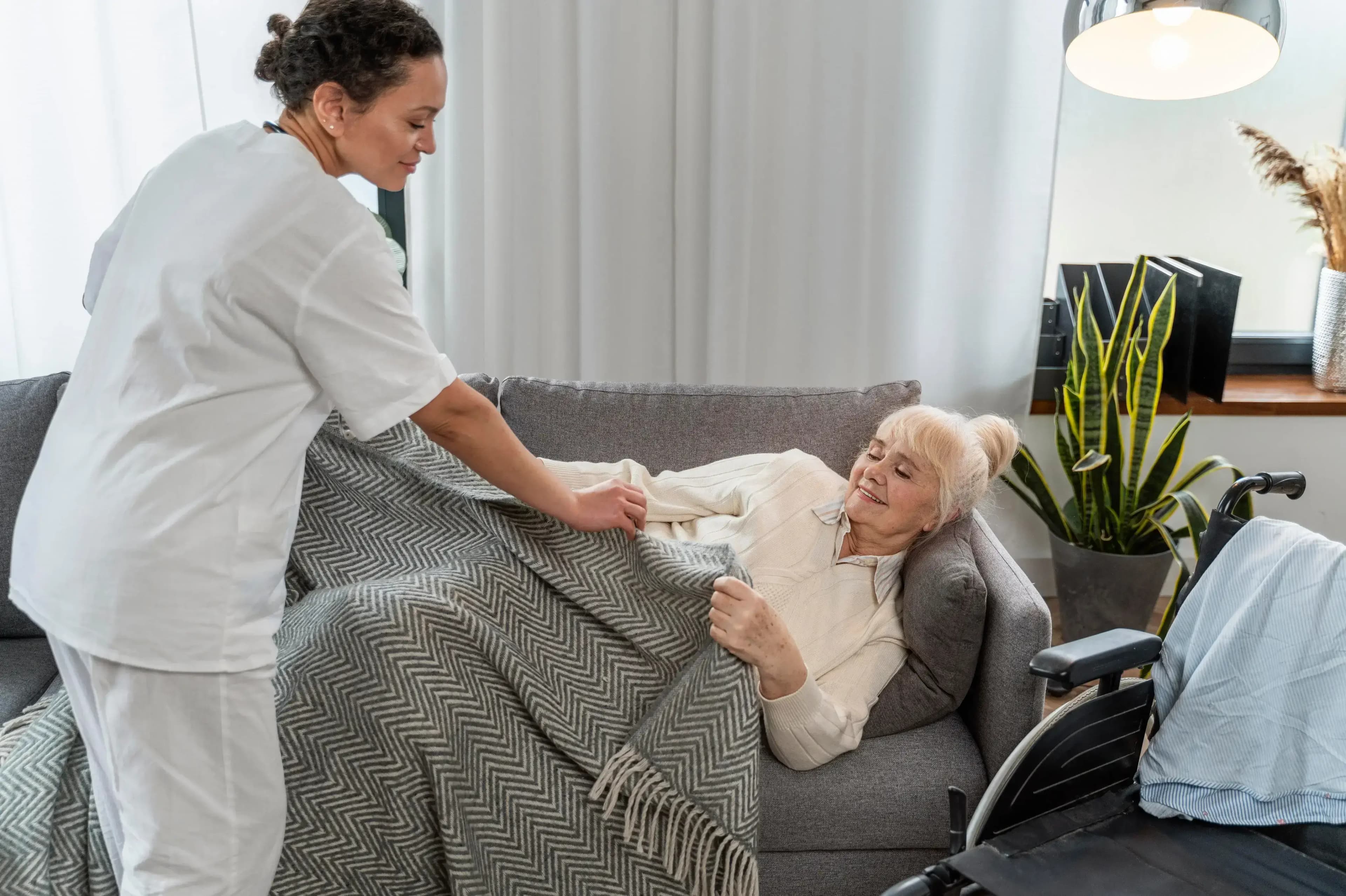
Personal Care and Health Support
- Assisting with washing, bathing, showering, oral hygiene, and dressing
- Supporting with toileting and continence management
- Medication prompting, reminding, and administration as per the care plan
- Monitoring health conditions and reporting changes to the office and health professionals
- Accompanying the person to GP, hospital, or specialist appointments

Meals, Nutrition, and Household Management
- Planning and preparing nutritious meals according to dietary needs and personal preferences
- Encouraging adequate food and fluid intake throughout the day
- Maintaining the cleanliness and tidiness of the home, including laundry, ironing, and general housekeeping
- Managing shopping lists and accompanying or arranging food deliveries

Companionship and Social Wellbeing
- Providing genuine companionship, conversation, and emotional support
- Supporting hobbies, interests, and social activities
- Helping the person maintain relationships with family, friends, and the community
- Accompanying them on outings, walks, religious services, or social events

Overnight Support
- Being available during the night to assist if needed (sleeping night or waking night as specified)
- Responding to call bells or movement sensors
- Assisting with repositioning, toileting, or medication during the night

Record Keeping
- Completing detailed daily care notes documenting all care provided
- Recording medication administration accurately
- Communicating with the office, family members, and health professionals as required
Defined Duties
You have a wider range of responsibilities than a visiting care assistant since you're around all day and night. Your tasks depend on each client's care plan, but usually include:
A Typical Day as a Live-in Carer
See what a day looks like when you're making a real difference in someone's life.
| Time | What You Are Doing |
|---|---|
| 07:00 | Wake and start the morning routine. Help your client get washed and dressed at their pace. Prepare breakfast together and assist with morning medication. |
| 09:00 | Light housekeeping. Put a load of washing on, tidy the kitchen, and prepare the living space for the day. |
| 10:30 | Mid-morning break for your client. Make tea and biscuits. Sit together, read the paper, or help them with a crossword puzzle. |
| 11:30 | Accompany your client to their GP appointment or a local shop. Help them stay connected with their community. |
| 12:30 | Prepare lunch together. Encourage them to help where they are able, promoting independence and engagement. |
| 14:00 | Your client rests after lunch. This is your designated break time. You can relax in your private room, go for a walk, or run errands. |
| 15:30 | Afternoon activity. This might be a gentle walk in the garden, video call with family, or watching a favourite television programme together. |
| 17:30 | Prepare and serve dinner. Assist with evening medication. Help your client get settled for the evening. |
| 19:30 | Evening companionship. Watch television together, play a board game, or simply have a chat over a cup of tea. |
| 21:00 | Help your client prepare for bed. Assist with personal care, ensure they are comfortable, set up any night-time equipment. |
| 21:30+ | You retire to your private room. You are available overnight if your client needs assistance, but this is your rest time. |
Your Break Entitlement
Live-in Carer Pay,
Accommodation, and Benefits
Everything you receive when you join Living Plus as a live-in carer.

Weekly Pay
Competitive weekly rate paid directly into your bank account. Rates reflect the round the clock nature of the role.
Free Accommodation
You are provided with your own private room in the client's home. This is your personal space for rest and privacy.
Free Meals
All meals are provided during your placement. You eat what the client eats, or you can prepare your own food.
Travel Expenses
Travel costs to and from placements are covered. We arrange transport between your home base and the client's home.
Rota Pattern
Typically 2 weeks on, 1 week off (or similar patterns). You have regular, scheduled time off to rest and recharge.
Holiday Entitlement
28 days paid annual leave per year (inclusive of bank holidays), calculated on a pro-rata basis.
Pension
Auto-enrolled into a workplace pension scheme with employer contributions.
Free DBS Check
We cover the cost of your enhanced DBS check as part of our safer recruitment process.
Full Training
Care Certificate, manual handling, safeguarding, medication management, dementia care, and specialist training.
24/7 On-Call Support
Round the clock telephone support from our management team. You are never alone in a live-in placement.
Regular Supervision
Scheduled supervision visits, spot checks, and formal one-to-one reviews with your line manager.
Career Progression
Clear pathway to senior live-in carer, care coordinator, and management roles with funded qualifications.
Live-in Care vs Visiting Care
Which Role Is Right for You?
Both roles are rewarding, but they suit different lifestyles and preferences.
| Aspect | Live-in Carer | Visiting Care Assistant |
|---|---|---|
| Where You Work | You live in the client's home during your placement | You travel between multiple clients' homes each day |
| Working Pattern | Typically 2 weeks on, 1 week off | Daily shifts (mornings, afternoons, evenings, or split) |
| Client Relationship | Deep, one-to-one relationship with a single client | Relationships with a small group of regular clients |
| Accommodation | Free private room in the client's home | You live at your own home |
| Meals | All meals provided during placement | Not provided; you bring your own |
| Travel | Travel to and from placement covered | Mileage paid between client visits (45p/mile) |
| Independence | Less personal freedom during placement weeks | More independence; go home after each shift |
| Pay Structure | Competitive weekly rate | Hourly rate with mileage and enhancements |
| Best For | People who enjoy immersive, one-to-one care and do not mind living away from home | People who prefer set hours and returning home each day |
Skills and Qualities for Live-in Carers
Live-in care requires a particular set of personal qualities beyond those needed for visiting care. You are sharing someone's home and their daily life, which requires a higher level of adaptability, patience, and emotional maturity.

- Genuine empathy and a caring nature: you are living alongside someone who depends on you
- Adaptability and flexibility: every client's home and routine is different
- Patience and calmness, especially when supporting people with dementia or complex needs
- Excellent communication skills for building rapport with clients, families, and professionals
- Self-motivation and the ability to work independently without constant supervision
- Respect for other people's homes, belongings, and way of life
- Emotional resilience to manage the intensity of a live-in placement
- Good organisational skills for managing meals, medication, appointments, and daily routines
- A positive, cheerful attitude that brightens someone's day
- Right to work in the United Kingdom
- Aged 18 or over
- Willingness to undergo an enhanced DBS check
- Good spoken and written English
- Willingness to live in a client's home for the duration of your placement
- Ideally, some previous care experience (but we consider strong candidates without)
- A full UK driving licence is highly desirable for live-in roles
Visa Sponsorship for Live-in Carers
Living Plus Care Services welcomes applications from candidates who require visa sponsorship for live-in carer roles. Care worker is on the UK Shortage Occupation List. We will discuss your individual circumstances during the application process.
Entry Requirements
You do not need to be an experienced live-in carer to apply, but some care experience is preferred. If you have worked as a visiting care assistant and want to try live-in care, this is the ideal progression.


How to Apply
Joining Living Plus Care Services is straightforward. We want to make the recruitment process simple, transparent, and respectful of your time. Here is what to expect.
Step 1
Get in Touch
Complete our online application form at /careers/apply-now or call us for an informal chat. Tell us about your experience, your availability, and whether you are interested in placements in Hertfordshire, Cambridgeshire, or both.
Step 2
Interview
We invite you for a face-to-face or video interview to discuss the role in detail, your experience, and your suitability for live-in care. We assess your values, resilience, and practical approach to care scenarios.
Step 3
Pre-Employment Checks
Enhanced DBS check, right to work verification, reference checks, and full employment history review as required by CQC Regulation 19 and Schedule 3.
Step 4
Training and Induction
Comprehensive induction programme including the Care Certificate (if not already completed), live-in care specific training, moving and handling, medication management, and client-specific preparation.
Step 5
Matched to Your First Client
We carefully match you with a client based on personality, interests, skills, and location. You receive a detailed briefing about your client, their care plan, and their home before your placement begins.
Ready to Join Our Office Team?
Competitive salary, Monday to Friday hours, career progression, and the opportunity to make a real difference behind the scenes.