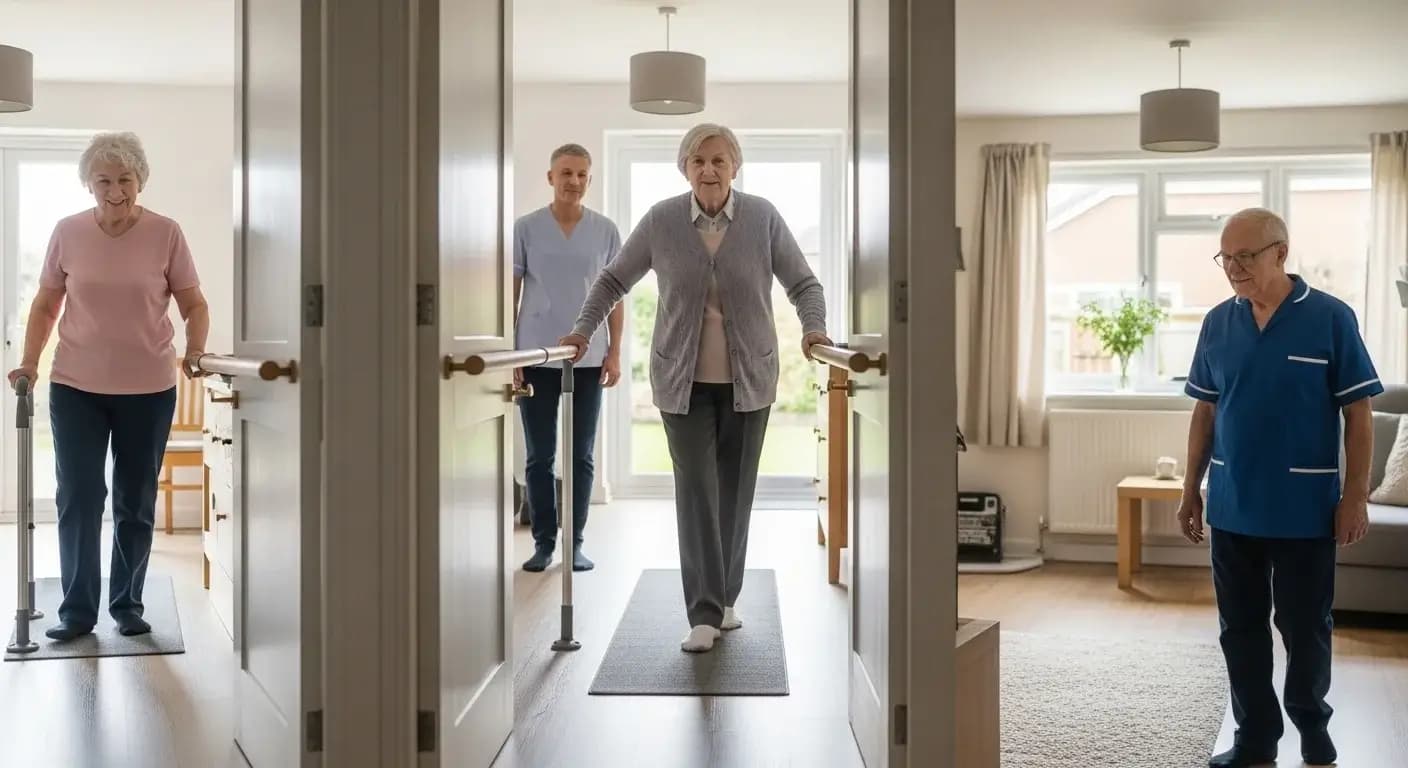
Walk-in showers
If feasible, a walk-in shower with minimal threshold is safer than baths. Combined with a fold-down seat and hand-held showerhead, it allows independence and safety.
A comprehensive guide to identifying and eliminating hazards around the home to keep elderly relatives safe from falls and injuries.
1 in 4
Adults aged 65+ experience falls annually
80%
Of falls are preventable with home safety measures
£2.3bn
Annual NHS cost of falls in people over 65
60%
Of homes have significant safety hazards
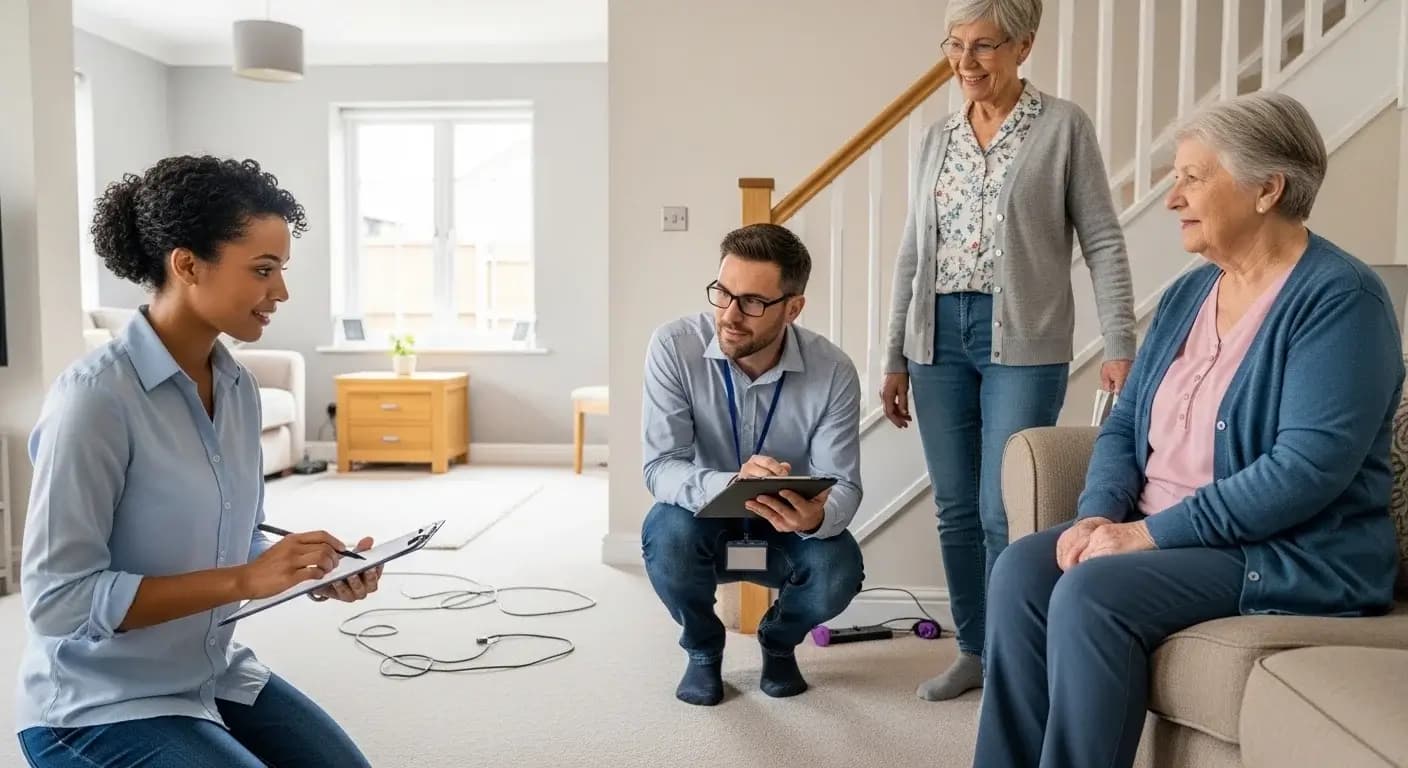
Falls are the leading cause of injury-related death and the most common cause of nonfatal trauma and hospital admissions for older people. Yet most falls are preventable. Between 80 and 90% of fall-related injuries can be avoided through simple home modifications, improved lighting, assistive equipment, and regular safety checks.
A single fall can change everything. Beyond the immediate injury, falls often lead to loss of confidence, reduced independence, prolonged hospital stays, and potentially permanent residential care. The emotional impact on families is profound as well.
Creating a safe home environment is not about restricting freedom or making a home feel clinical. It is about removing unnecessary hazards so your elderly relative can remain independent, confident, and comfortable in the place they love most. This checklist provides a practical, room-by-room approach to home safety.
The kitchen is a high-risk area for falls and injuries. Slippery floors, hot appliances, and reachable items create multiple hazards. A safe kitchen is one where everything is accessible without stretching or bending, floors are dry and non-slip, and appliances are used safely.
If feasible, a walk-in shower with minimal threshold is safer than baths. Combined with a fold-down seat and hand-held showerhead, it allows independence and safety.
Mark hot taps to prevent scalding. Use thermostatic mixing valves to regulate water temperature automatically.
Remove clutter, towels, and personal items from the bathroom floor. Keep a waste bin within reach but not in the path.
A raised toilet seat or toilet frame with armrests makes standing easier and reduces strain on knees and hips. Add grab rails on each side for additional support.
Ensure good ventilation to reduce humidity and steam, which creates slippery surfaces. An extractor fan should run for 20 minutes after showering.
Install bright, shadow-free lighting, especially around the bath and toilet. Consider a nightlight or motion-sensor light for night-time visits.
A safe bedroom enables good sleep and safe movement during the night when falls are common. Elderly people often need to use the toilet at night, so the bedroom and the route to the bathroom must be hazard-free.
The bed should be at a height where feet touch the ground when sitting on the edge. Too high or too low increases fall risk when getting in or out. Adjustable beds can be raised to the correct height. Use bed rails only if specifically recommended by an occupational therapist, as inappropriate use can increase fall risk.
Create a clear route from bed to bedroom door and to the bathroom. Remove rugs, furniture edges that protrude, and electrical cords.
Non-slip soles on bedroom slippers reduce the risk of sliding on smooth floors or tiles.
A medium-firm mattress is safer than a soft one, as it reduces the effort needed to stand up.
Install a bedside lamp within easy reach. Use motion-sensor lights along the pathway to the bathroom and on the stairs to provide light automatically when needed at night.
Keep a mobile phone, a torch, and a personal alarm by the bed in case of falls or emergencies at night.
Install a working smoke alarm in or near the bedroom. Test monthly and replace batteries annually. For deaf or hard of hearing relatives, consider a vibrating alarm.
Living rooms and hallways are transition spaces where falls commonly occur during movement between rooms. Removing trip hazards and improving visibility is critical.
Loose rugs are trip hazards. If rugs are important for comfort, secure them with non-slip rug underlays or use fitted carpets instead.
Regularly remove magazines, newspapers, books, and other items from floors, side tables, and hallways. Even small items underfoot can cause a trip.
Ensure hallways are well-lit from end to end. Avoid dark corners. Use nightlights in hallways and near doorways. Install motion-sensor lights that automatically illuminate when movement is detected.
Arrange furniture to create clear, wide pathways. Do not block doorways or force movement around obstacles. Furniture should not have sharp corners at head or shin height.
Keep electrical cords against walls using cord covers or tape. Avoid trailing wires across walkways.
The landing at the top and bottom of stairs should be clear and well-lit. Install a handrail on the landing if not already present.
Avoid highly polished floors that become slippery. If necessary, use non-slip floor polish or place non-slip mats in high-traffic areas.
Stairs present a significant fall risk. Older people are at particular risk because balance changes, vision declines, and strength decreases affect stair negotiation. Proper equipment and home adaptations are essential.
Install sturdy handrails on at least one side (ideally both) of the staircase. Handrails should be 32-38mm in diameter, smooth and continuous, extending from the bottom to the top step. At least 50mm of space should exist between the handrail and the wall for grip.
Apply contrasting tape or paint to the front edge of each step to improve visibility, particularly the first and last steps.
For those with significant mobility difficulties, a stairlift is a practical solution allowing independent use of stairs. Modern stairlifts are compact, quiet, and can be folded away when not in use. A curved stairlift can navigate L-shaped stairs.
If possible, design the home to allow access to frequently used areas without climbing stairs. A downstairs bedroom or bathroom may be necessary as mobility declines.
Install bright lighting at the top and bottom of stairs and on the landing. Ensure there are no shadows cast across steps. Consider motion-sensor lights for night-time safety.
Ensure stair carpet is in good condition, firmly fixed, and not worn smooth. Replace worn carpet promptly.
At the top of stairs, a baby gate or safety gate prevents accidental falls, particularly useful if cognitive decline is present or if a person is confused at night.
Test handrails thoroughly before installation. They must support your full weight without flexing or moving. If you are unsure, hire a professional installer.
Elderly people are at higher risk of death and injury in fires because they may not hear alarms, may move slowly, and may have difficulty escaping. Comprehensive fire safety is essential.
Install smoke alarms on every level of the home and near bedrooms. Test monthly. Replace batteries annually (use calendar reminders). For deaf or hard of hearing relatives, use alarms with strobe lights and bed vibrators.
Keep a fire blanket in the kitchen for small grease fires. It should be easily accessible but not directly next to the cooker (you need to approach from the side to avoid flames).
Do not overload sockets. Use socket extenders with on-off switches. Ensure old appliances are regularly checked for safety. Do not use extension leads as a permanent solution.
Keep heaters, fires, and radiators away from curtains, bedding, and upholstered furniture. Do not use portable heaters in bedrooms unattended.
Develop and practise an escape plan. Know two ways to exit each room. Identify a meeting place outside the home. Practise the plan regularly.
Keep a fire extinguisher in the kitchen rated for grease and electrical fires. Ensure your relative knows it is there but encourage calling the fire service rather than fighting a fire.
Turn off the hob when unattended. Use the back rings first. Keep a close eye on cooking. Consider a cooker guard if safety is a concern.
Keep matches, lighters, and candles out of reach. Do not use candles unattended or in rooms where someone sleeps.
In a fire, evacuate immediately. Do not attempt to save possessions. Close doors behind you to slow the spread of fire and smoke. Call the fire service from outside.
Modern technology offers practical solutions to enhance home safety and provide peace of mind. These tools allow your elderly relative to maintain independence whilst ensuring help is available if needed.
Wearable devices (worn as a pendant or wristband) allow immediate contact with a response centre or designated contacts with one button press. Suitable for anyone living alone or at risk of falling. Some detect falls automatically.
Remote monitoring systems that alert carers or family to unusual activity patterns. Bed sensors detect if someone has not got up by a certain time. Pressure mats alert to night-time wandering.
Passive infrared sensors detect movement and automatically trigger lights, reducing fall risk during night-time visits to the toilet.
Voice-controlled or remote-controlled lighting allows turning lights on without getting out of bed or walking in the dark. Timed lighting gradually increases at set times to help with waking.
Allow viewing who is at the door before answering. Safer than opening doors to unknown visitors.
Automated dispensers remind your relative when to take medication and alert you if they have not taken their tablets. Reduces medication errors and missed doses.
Alerts if the house becomes too hot or cold, preventing risk from heat exhaustion or hypothermia.
Secure wall-mounted boxes hold a spare key, allowing carers and emergency services access without requiring your relative to answer the door. Access codes can be changed regularly.
Discreet cameras in living areas allow carers or family to check on wellbeing remotely. Always ensure privacy and obtain consent
Many local councils offer subsidised or free telecare equipment for people with eligible needs. Ask your occupational therapist or contact adult social services to explore what is available locally.
Creating a safe home is not something you need to do alone. Several professionals can assess your home and recommend appropriate modifications and equipment.
An occupational therapist (OT) is a specialist trained to assess how someone manages daily activities at home and to recommend adaptations and equipment to maintain independence and safety. They can conduct a thorough home assessment, identify specific hazards, and recommend tailored solutions.
Disabled Facilities Grant
In England, a Disabled Facilities Grant (DFG) provides funding (up to GBP 30,000) towards the cost of home adaptations like ramps, grab rails, and bathroom modifications. Your local council administers the grant. An occupational therapist will assess your needs and recommend work. Eligibility is means-tested based on your savings and income.
Many councils offer small grants for essential safety items like grab rails, smoke alarms, and toilet seats. Contact your local council's adult social care team to ask what is available in your area.
Organisations such as Age UK, Foundations, and the British Red Cross can assist with small adaptations and emergency repairs. Some offer funding, tool loans, or volunteer handyperson services
We offer comprehensive home safety assessments as part of our care services. Our team can identify hazards, recommend equipment, liaise with occupational therapists, and help coordinate professional installation. This assessment is free and helps us develop a personalised care plan for your relative.
Use this comprehensive checklist when conducting a home safety audit. Work through each room methodically, ticking items as you address them. Print this section and carry it as you walk through the home; make notes about any specific hazards you discover.
| Item to Check | Status | Action Needed |
|---|---|---|
| Non-slip mats under sink and cooker | ||
| Spill-free pathway to key areas | ||
| Bright, shadow-free lighting over worktops | ||
| Frequently used items at waist-shoulder height | ||
| Back rings of hob used first; handles turned in | ||
| Fire blanket located (not next to cooker) | ||
| Kettle on stable, heat-resistant surface | ||
| Boiler thermostat set to 49 degrees C | ||
| Appliance cords secured; no trailing wires | ||
| Flooring is slip-resistant | ||
| Cupboards labelled clearly |
| Item to Check | Status | Action Needed |
|---|---|---|
| Grab rails installed both sides of toilet | ||
| Grab rails installed in shower or bath | ||
| Non-slip bath mat with suction cups | ||
| Non-slip strips on shower floor | ||
| Shower seat present and stable | ||
| Raised toilet seat with armrests | ||
| Clear floor space; no clutter | ||
| Bright lighting; no dark corners | ||
| Ventilation adequate; extractor fan working | ||
| Hot water temperature regulated | ||
| Nightlight or motion sensor light installed |
| Item to Check | Status | Action Needed |
|---|---|---|
| Bed at correct height (feet touch ground) | ||
| Firm mattress (not too soft) | ||
| Clear pathway from bed to door | ||
| Clear pathway from bed to bathroom | ||
| Bedside lamp within easy reach | ||
| Motion-sensor lights on landing and bathroom path | ||
| Non-slip slippers readily available | ||
| Mobile phone by bed | ||
| Torch by bed for night-time use | ||
| Personal alarm by bed | ||
| Working smoke alarm in or near bedroom |
| Item to Check | Status | Action Needed |
|---|---|---|
| Loose rugs removed or secured | ||
| Furniture arranged for clear pathways | ||
| Doorways not blocked | ||
| No magazines, books, or items on floor | ||
| Electrical cords against wall or covered | ||
| Good lighting throughout hallways | ||
| Nightlights in hallways and near doors | ||
| Motion-sensor lights installed | ||
| Stair landing clear and well-lit | ||
| Flooring is slip-resistant (not highly polished) |
| Item to Check | Status | Action Needed |
|---|---|---|
| Handrail on at least one side (both is better) | ||
| Handrail 32-38mm diameter, smooth and continuous | ||
| 50mm space between handrail and wall | ||
| Bright lighting at top and bottom of stairs | ||
| No shadows cast across steps | ||
| Contrasting tape on step edges (first and last) | ||
| Stair carpet in good condition and firmly fixed | ||
| Stairlift installed (if needed) | ||
| Safety gate at top of stairs (if needed) | ||
| Second floor bedroom or bathroom accessible |
| Item to Check | Status | Action Needed |
|---|---|---|
| Pathways firm, even, and well-maintained | ||
| Cracks and subsidence repaired | ||
| No loose paving or cobbles | ||
| Motion-sensor lights along pathways | ||
| Dusk to dawn lights around garden | ||
| Steps clearly marked with contrasting colour | ||
| Handrails on steps and slopes | ||
| Protruding roots and branches removed | ||
| Uneven surfaces levelled | ||
| Sturdy seating provided and secured | ||
| Tools and garden equipment stored securely | ||
| Fallen leaves and snow cleared promptly |
| Item to Check | Status | Action Needed |
|---|---|---|
| Smoke alarm on every level | ||
| Smoke alarms near bedrooms | ||
| Alarms tested monthly | ||
| Batteries replaced annually | ||
| Strobe alarms for deaf relatives | ||
| Escape plan developed and practised | ||
| Two exits per room identified | ||
| Fire blanket in kitchen (not next to cooker) | ||
| Fire extinguisher in kitchen (grease and electrical) | ||
| Electrical sockets not overloaded | ||
| Heaters kept away from flammable items | ||
| Candles used only when supervised |
Our care team can conduct a comprehensive home safety assessment and help identify hazards specific to your relative. We provide practical recommendations and can coordinate with occupational therapists and adaptations services.
Request Free Home Safety Assessment: www.livingpluscare.co.uk/contact