











Attendance Allowance: Complete Guide

Complete guide to Attendance Allowance. Who qualifies, current rates, how to claim, tips for a successful application, and how it helps pay for home care.

  • ~1.6M

    People currently claim Attendance Allowance

  • £110.40

    Higher rate per week (2025/26)

  • £73.90

    Lower rate per week (2025/26)

  • £5,741

    Higher rate annual amount

What Is Attendance Allowance?

Attendance Allowance (AA) is a tax-free, non-means-tested benefit for people of State Pension age or over who need help with personal care or supervision due to a disability or illness. Unlike many other benefits, it is not dependent on your National Insurance contributions or how much money you have saved.

Around 1.6 million people across the UK currently claim Attendance Allowance. It is paid at two rates depending on the level of care you need: a lower rate if you need help during the day or night, and a higher rate if you need help both day and night or if you are terminally ill.

The key advantage of Attendance Allowance is that you do not need to have a carer already in place to claim. You simply need to demonstrate that you need help. Many people use the allowance to pay for home care visits, but you are free to spend it on anything that helps with your care needs.

An adviser with an older woman, a tablet and a calculator
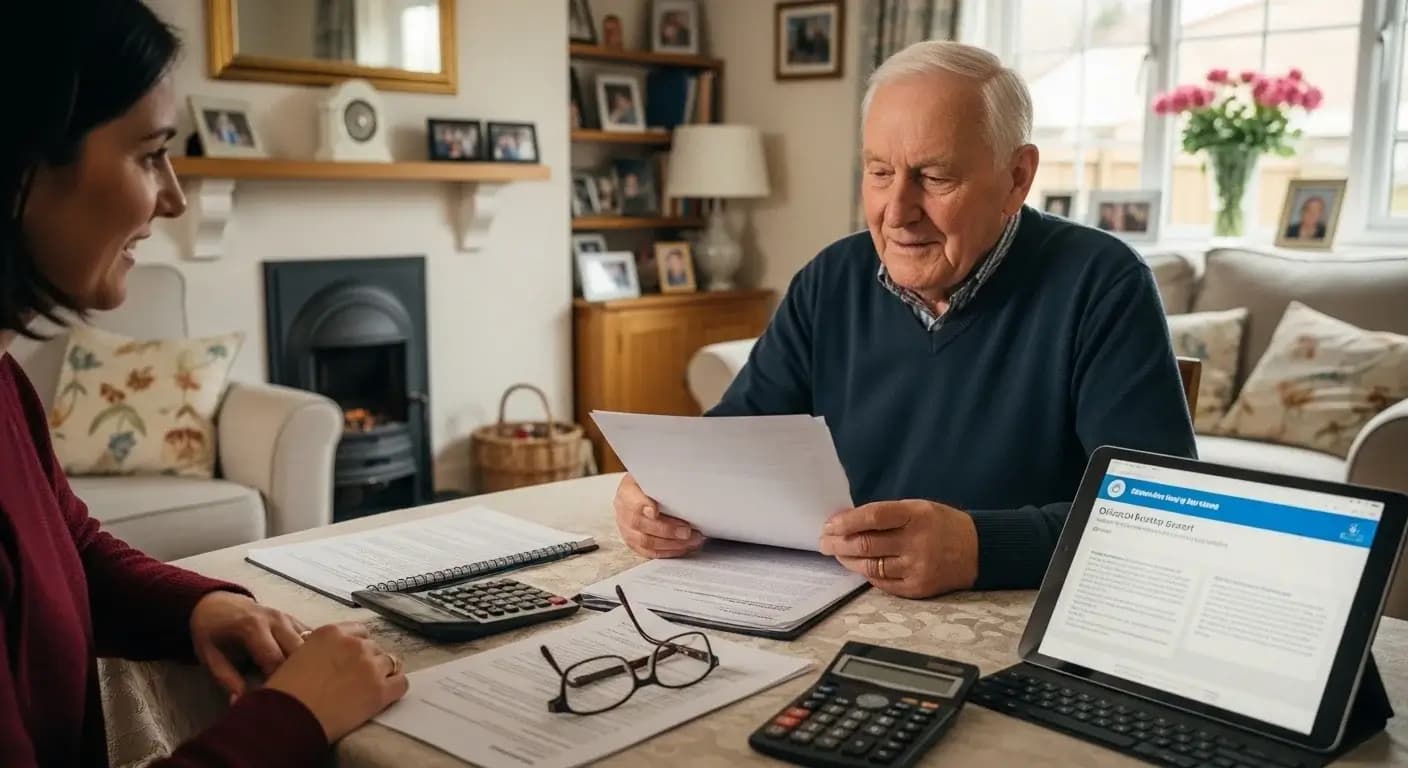
An older man reviewing documents with an adviser
An older woman with an adviser and a calculator

Current Rates (2025/26)

Attendance Allowance is paid at two rates, depending on whether you need help during the daytime or nighttime, or both.

  • LOWER RATE

    £73.90

    Per week

    ~£3,843 per year

    For daytime care or nighttime care needs — but not both.

  • HIGHER RATE

    £110.40

    Per week

    ~£5,741 per year

    For daytime AND nighttime care needs, or if terminally

    Most Common
  • NEXT INCREASE

    April 2026

    expected

    Annual review

    Rates usually increase each April in line with inflation

Who Can Claim Attendance Allowance?

To claim Attendance Allowance, you must meet all of the following criteria:

  • State Pension age or over (currently 66 for both men and women, rising to 67 from April 2026)

  • Have a physical or mental disability or illness

  • Need help with personal care OR supervision to keep yourself safe

  • Have needed help for at least 6 months (or are expected to need help for 6+ months)

  • Live in England, Scotland, or Wales

  • Not in a care home funded by your local authority (though you CAN claim if you are self-funding in a care home)

An adviser meeting an older couple on a sofa

What Counts as Needing Help?

To qualify for Attendance Allowance, you must show that you need help with personal care or supervision. Here is what the Department for Work and Pensions considers as needing help:

  • Daytime Care Needs

    You might need help during the day if you struggle with:

    • Washing or bathing
    • Dressing or undressing
    • Using the toilet (including managing continence)
    • Eating or drinking (including preparing meals)
    • Taking medication or managing health conditions
    • Moving around safely (risk of falls, mobility issues)
    • Communicating with others
    • Being aware of danger (confusion, disorientation)
  • Nighttime Care Needs

    You might need help at night if you require:

    • Help getting in or out of bed
    • Help using the toilet at night
    • Help turning over in bed
    • Someone awake and watching over you
    • Frequent attention during the night
  • Supervision Needs

    You might need supervision (having someone keep an eye on you) if you:

    • Are at risk of falls and need someone present
    • Have confusion or dementia and may wander
    • Have a mental health condition and need monitoring
    • Are at risk of harming yourself or others
    • Need support in an emergency
  1. An older woman calling the helpline

    Step 1: Get the AA1 Claim Form

    Contact the Department for Work and Pensions to request the Attendance Allowance claim form (AA1). You can:

    • Call the Attendance Allowance helpline on 0800 731 0122 (free from landlines and most mobiles)
    • Download the form from gov.uk (search for 'Attendance Allowance claim form')
    • Request a paper form be sent to you by post
  2. An older woman filling in a claim form

    Step 2: Complete the Form Carefully

    The AA1 form is detailed and asks about your daily activities, your difficulties, and the help you need. Take your time filling it in. The form typically covers:

    • Your personal details and health conditions
    • How your condition affects your ability to carry out everyday activities
    • Whether you need help during the day and at night
    • Specific examples of activities you struggle with
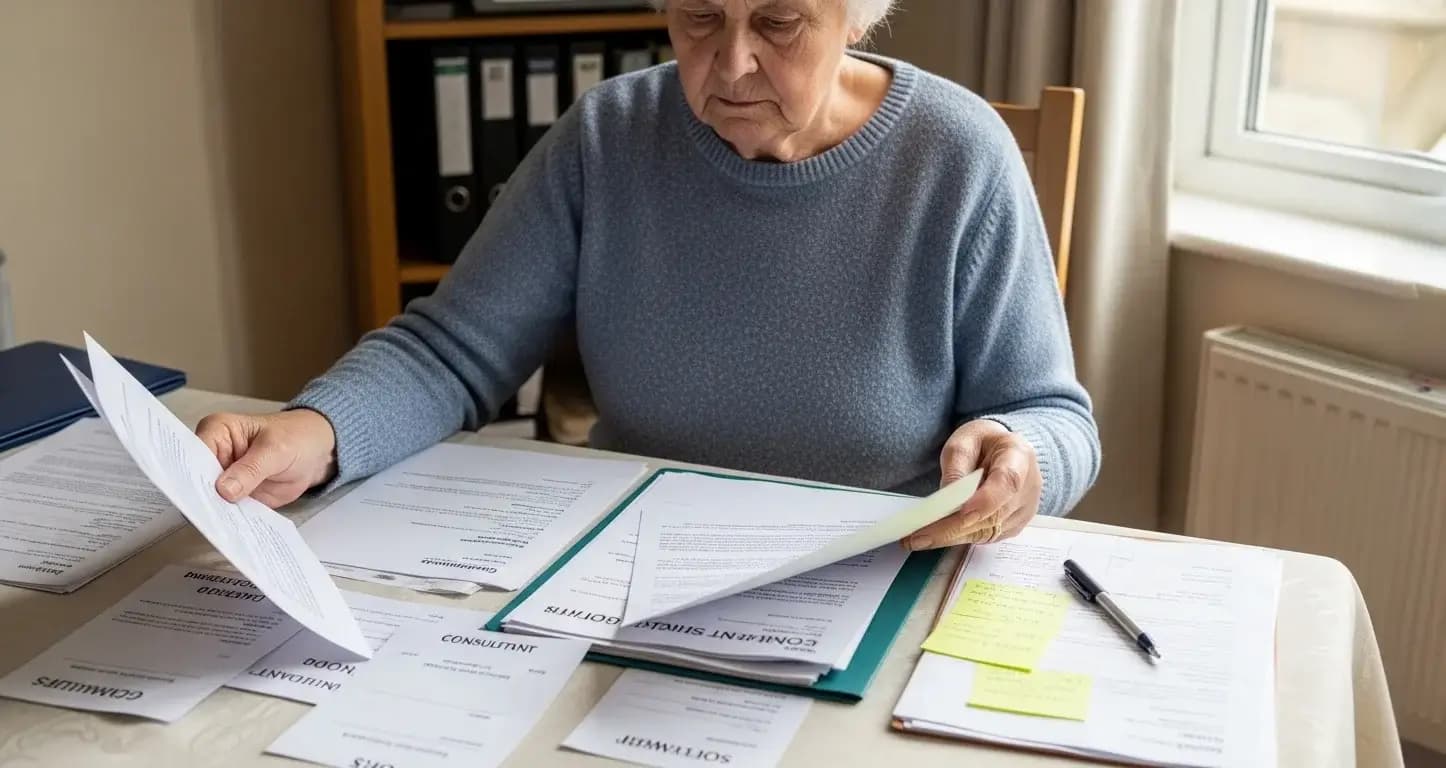
  3. An older woman sorting paperwork at a table

    Step 3: Gather Supporting Evidence

    The stronger your supporting evidence, the more likely your claim will be successful. Gather letters and reports from:

    • Your GP (a letter explaining your condition and care needs)
    • Your consultant or specialist doctor
    • District nurse or health visitor
    • Occupational therapist (if you have had a home assessment)
    • Social worker or care manager
    • Anyone else with relevant knowledge of your care needs
  4. An older woman opening a brown envelope

    Step 4: Submit Your Claim

    Send your completed form and supporting evidence by post to the address on the form. Keep a copy of everything you submit. Consider sending it by special delivery so you have proof of posting.

  5. An older woman reading a letter in an armchair

    Step 5: Await the Decision

    Most Attendance Allowance claims do not require a medical examination. The decision maker will review your form and supporting evidence. You should receive a decision letter within 4-8 weeks. If you are terminally ill, the process is much faster (usually within days).

  6. An older woman with a tablet and a cup of tea

    Step 6: Receive Your Payment

    If your claim is approved, payment usually begins from the date you applied (or from three months before if you were eligible longer). You can backdate your claim up to three months. Payment is made every four weeks directly into your bank account.

Tips for a Successful Application

Here are the most important things to remember when completing your Attendance Allowance claim:

Carers in a clinical skills training session
  • 01

    Describe Your Worst Days

    The assessment considers your worst days and what you need on those days, not your best days. Be honest about when you struggle most.

  • 02

    Don't Minimise Your Difficulties

    Do not downplay how your condition affects you. Explain the full impact on your daily life, including psychological and emotional effects.

  • 03

    Include Specific Examples

    Rather than saying 'I struggle with washing', write 'I need help washing because I have severe arthritis and cannot raise my arms above shoulder height. I need assistance getting in and out of the bath.'

  • 04

    Describe What Would Happen Without Help

    Explain the consequences of not having help. For example, 'Without help, I would fall when trying to wash my hair' or 'I would not eat or drink without reminders.'

  • 05

    Mention Falls or Incidents

    Include any falls you have had, near-misses, or times you have had an accident. These are important examples of why you need help.

  • 06

    Detail Your Nighttime Needs

    Nighttime support is crucial for the higher rate. Describe clearly if you need help at night, how often, and what help you need (turning over, toileting, supervision).

  • 07

    Get Help Completing the Form

    Ask a friend, family member, or professional (GP, social worker, Citizens Advice) to help you fill in the form. A second pair of eyes helps ensure nothing is missed.

  • 08

    Include Your Medication List

    List all medications you take and include information from your GP about side effects that affect your daily activities (drowsiness, instability, confusion).

  • 09

    Use Positive Language

    Use phrases like 'I need help with...' rather than 'I can't...'. Focus on what you need rather than what you cannot do.

  • 10

    Keep Copies of Everything

    Photocopy your completed form and all supporting evidence before posting. Keep these for your records in case you need to appeal.

  • Need Help With Your Attendance Allowance Application?

    Speak to our team now and get the support you need to complete your application correctly the first time

    Contact Us Now

The Claim Form: Section-by-Section Guide

The AA1 form has several key sections. Here is guidance for completing each section effectively:

  • About Your Health and Conditions

    List all your health conditions, disabilities, and illnesses, even if they seem unrelated. Include mental health conditions, mobility issues, sensory impairments, and any condition affecting your daily life. Provide dates of diagnosis if possible.

  • About Your Daily Activities

    This is the most important section. For each activity, describe what you find difficult, what help you need, and how often you need it. Use specific, detailed language. For example, instead of 'I can't walk properly', write 'I use a walking frame and need someone to hold my arm.

  • About Your Care Needs

    Be clear about whether you need help with personal care (physically helping you), supervision (someone being present and watchful), or prompting (reminders to do things). Describe both daytime and nighttime needs separately and clearly.

Common Mistakes to Avoid

Many claims fail because people describe their best days rather than their worst, or because they are too brief in their descriptions. Avoid:

  • Describing good days or days when you manage well

  • Being too general (e.g., 'I struggle with mobility' rather than specific details)

  • Leaving sections blank or answering with single words

  • Failing to mention mental health conditions or supervision needs

  • Not explaining the consequences of not having help

  • Not mentioning falls, incidents, or near-misses

Special Rules for Terminal Illness

If you have been diagnosed with a terminal illness (where you are not expected to live more than six months), different rules apply. You automatically qualify for the higher rate of Attendance Allowance regardless of your current care needs.

  • What Is Required

    To claim under the terminal illness rules, you need: A form DS1500 or SR1 completed by your GP or hospital consultant, This form confirms your terminal diagnosis and that life expectancy is 6 months or less, You do not need to show that you need care or supervision.

  • How the Process Works

    Claiming under the terminal illness route is fast-tracked. Your claim will be processed within days (sometimes hours) rather than weeks. You receive the higher rate of Attendance Allowance automatically. There is no requirement to wait for evidence of care needs or to demonstrate that you need supervision.

  • Getting the DS1500 Form

    Contact your GP or hospital consultant and ask them to complete the DS1500 form to confirm your terminal diagnosis. You will need to discuss your condition with them and ask them to submit the form to the Department for Work and Pensions on your behalf (or you can submit it yourself).

How Attendance Allowance Helps Pay for Home Care

Attendance Allowance is a flexible benefit. You can use it to pay for home care visits, help with daily living, or anything else that supports you in managing your care needs. This flexibility makes it particularly valuable for funding private home care.

Combined Funding

Many people combine Attendance Allowance with council-funded home care to create a comprehensive care package. For example, you might receive council-funded care for morning personal care, and use your Attendance Allowance to fund evening companionship visits.

Using AA for Home Care Visits

If you claim the higher rate of Attendance Allowance (£110.40 per week), this equips you to pay for approximately 3-4 hours of home care per week at the national average rate of £32/hour. Many people use their Attendance Allowance to top up council-funded care or to arrange entirely private care.

Flexibility in How You Use It

Your Attendance Allowance is not ring-fenced. You can use it to pay for:

  • Home care visits for personal care or companionship
  • Adaptations to your home (grab rails, raised toilet seats)
  • Transport or taxis to medical appointments or social activities
  • Respite care to give family carers a break
  • Specialist equipment or mobility aids
  • Any other support that helps with your care needs

Other Benefits Attendance Allowance Can Unlock

Receiving Attendance Allowance can make you eligible for several other benefits and support:

An older woman using a laptop with paperwork beside her
  • Carer's Allowance

    If someone cares for you for at least 35 hours per week, they may be eligible for Carer's Allowance (£81.90 per week). Your receipt of Attendance Allowance makes them eligible to claim.

  • Pension Credit

    If you are on a low income, Pension Credit provides extra money to top up your income. If you qualify for Attendance Allowance, you get an additional 'premium' (extra money) added to your Pension Credit award.

  • Council Tax Reduction or Exemption

    If you are severely mentally impaired (often linked to dementia), you may qualify for a council tax discount or exemption. Attendance Allowance can be used as evidence of qualifying condition.

  • Housing Benefit (if applicable)

    If you receive Housing Benefit, Attendance Allowance increases your applicable amount, potentially resulting in higher Housing Benefit payments.

  • Blue Badge Scheme

    Whilst Attendance Allowance alone does not automatically qualify you for a Blue Badge (disabled parking permit), it is one of the factors assessed. If you have mobility difficulties linked to your care needs, you may be eligible.

  • Warm Home Discount Scheme

    This scheme provides a one-off payment of up to £150 towards your winter heating costs. Pensioners receiving certain benefits, including those on Pension Credit, are eligible.

If Your Claim Is Refused

If your Attendance Allowance claim is refused, this is not the end of the road. You have the right to challenge the decision, and many claims succeed on appeal, particularly if you provide new evidence.

An older woman reviewing a letter with two advisers

Mandatory Reconsideration

Within one month of receiving the refusal letter, you can request a Mandatory Reconsideration. This means the decision will be reviewed by a different decision maker. When requesting reconsideration, provide:

  • New medical evidence (letters from your GP, consultant, occupational therapist)
  • Additional examples of your care needs
  • More detailed descriptions of how your condition affects you
  • Any incidents or falls that have occurred since your original claim

Appeal to Social Security Tribunal

If the Mandatory Reconsideration is unsuccessful, you have the right to appeal to an independent tribunal. Many people succeed at this stage because tribunals take a more holistic view of your needs. You can:

  • Appeal without a hearing (paper appeal)
  • Request a hearing where you can present your case in person
  • Have a representative (friend, family member, or adviser) support you

Getting Support

Free help is available from:

  • Citizens Advice (local office or online)
  • Age UK (especially valuable if you are over 60)
  • Local welfare rights services (contact your council)
  • Condition-specific charities relevant to your health condition

These organisations can help review your decision, gather evidence, request reconsideration, and prepare an appeal.

Attendance Allowance and Care Homes

There are specific rules about claiming Attendance Allowance if you live in a care home:

  • You CAN Claim If You Are Self-Funding

    If you pay for your own care home fees, you can claim Attendance Allowance. Your allowance is paid to you and can be used to help offset the cost of your care home fees.

  • You CANNOT Claim If Local Authority Funds Care Home

    If your local authority pays for your care home care, you cannot claim Attendance Allowance. Your allowance will stop after 28 days in a council-funded care home. Once you leave the care home or switch to self-funding, you can make a new claim

  • Hospital Stays

    If you are admitted to hospital, your Attendance Allowance stops after 28 days. It restarts when you are discharged (provided you meet the other criteria). If your hospital stay is longer than 28 days, notify the Department for Work and Pensions to prevent overpayment.

Frequently Asked Questions

Frequently Asked Questions About Attendance Allowance

Find answers to common questions about Attendance Allowance. If you can't find what you're looking for, please call us on 0333 577 0877.

Chat with our team.

Ready to Claim or Need Help With Your Application?

We can help you understand how Attendance Allowance can contribute towards funding your home care. Contact us for a free, no-obligation assessment and advice about your eligibility.

Get in Touch: www.livingpluscare.co.uk/contact

Hatfield: 01707 707599Peterborough: 01733 911656